
How-To & Tutorials
How to Earn From Monetag: Realistic Numbers for Website and Social Traffic

☰ Table of Contents
Most articles about how to earn from Monetag read like lottery tickets: “passive income on autopilot,” screenshots of someone else’s dashboard, and zero traffic math. We run Monetag on this very site, so this guide skips the hype and covers what we’ve actually seen: what the network pays for, which ad formats carry the weight, what CPMs look like in realistic ranges, and how people earn from social media traffic without even owning a big website.
If you already have traffic — a blog, a tool site, a download page, or a decent social following — Monetag for beginners is a genuinely fast start. If you have neither, read the traffic math section before the sign-up section, because the order matters.
What Monetag Actually Pays For
Monetag is an ad network on the publisher side of the industry: advertisers pay to reach your visitors, and Monetag passes most of that to you, priced per thousand impressions (CPM) or per conversion depending on the format. Unlike AdSense-style contextual ads, the money doesn’t come from someone politely clicking a relevant ad. It comes from volume: impressions, popunders served, push subscriptions that keep paying after the visit ends.
That difference decides everything. AdSense rewards a small amount of high-intent traffic on commercial topics. Monetag rewards any traffic — downloads, entertainment, how-to content, even mixed GEOs — because someone in the ad chain will pay for it. Tier-1 countries (USA, Canada, UK, Western EU) earn the highest rates; that’s why our own content strategy targets those audiences first.
One honest caveat before the setup steps: a CPM network and a good user experience pull in opposite directions. Aggressive formats earn more and annoy more. We keep popunder caps low on Earn Kit Lab and lean on lighter formats, because readers matter more than the last 10% of RPM. You’ll make the same trade-off, and you should make it deliberately.
Sign-Up and Approval: Easier Than AdSense
This is where Monetag for beginners wins its reputation. There is no content review gauntlet like AdSense and no minimum traffic threshold. The practical sequence:
- Sign up with an email at Monetag and confirm it.
- Add your website (a working site with some real content; parked domains get rejected or stall).
- Install the tag — paste the ad code in your site’s header, or use the official Monetag plugin if you’re on WordPress, which is exactly how this site runs it.
- Verify traffic in the dashboard and enable the formats you want, one at a time, watching RPM and bounce rate for a few days each.
Approval is usually quick because the network checks quality from live traffic rather than pre-approving content. The flip side: quality is enforced after you start, so read the banned-mistakes section below before you get clever with traffic sources.
The Four Formats That Do the Work
Monetag’s Monetag ad formats each behave differently, and choosing them is the highest-leverage decision you’ll make after sign-up:
| Format | How it earns | Best used on |
|---|---|---|
| Popunder (OnClick) | Pays when the visitor clicks anywhere and a window opens behind the page | High-volume pages where UX damage is tolerable; caps matter |
| Push notifications | Visitor accepts notifications; the subscription pays, then recurring impressions pay again | Content sites with return visitors — earns after the visit ends |
| Interstitial / Vignette | Full or partial-screen ad between page views | Mobile-heavy traffic, tool pages, download flows |
| Direct Link / SmartLink | A plain URL you share anywhere; it auto-redirects each click to the best-paying offer | Social media, Telegram channels, forums — no website needed |
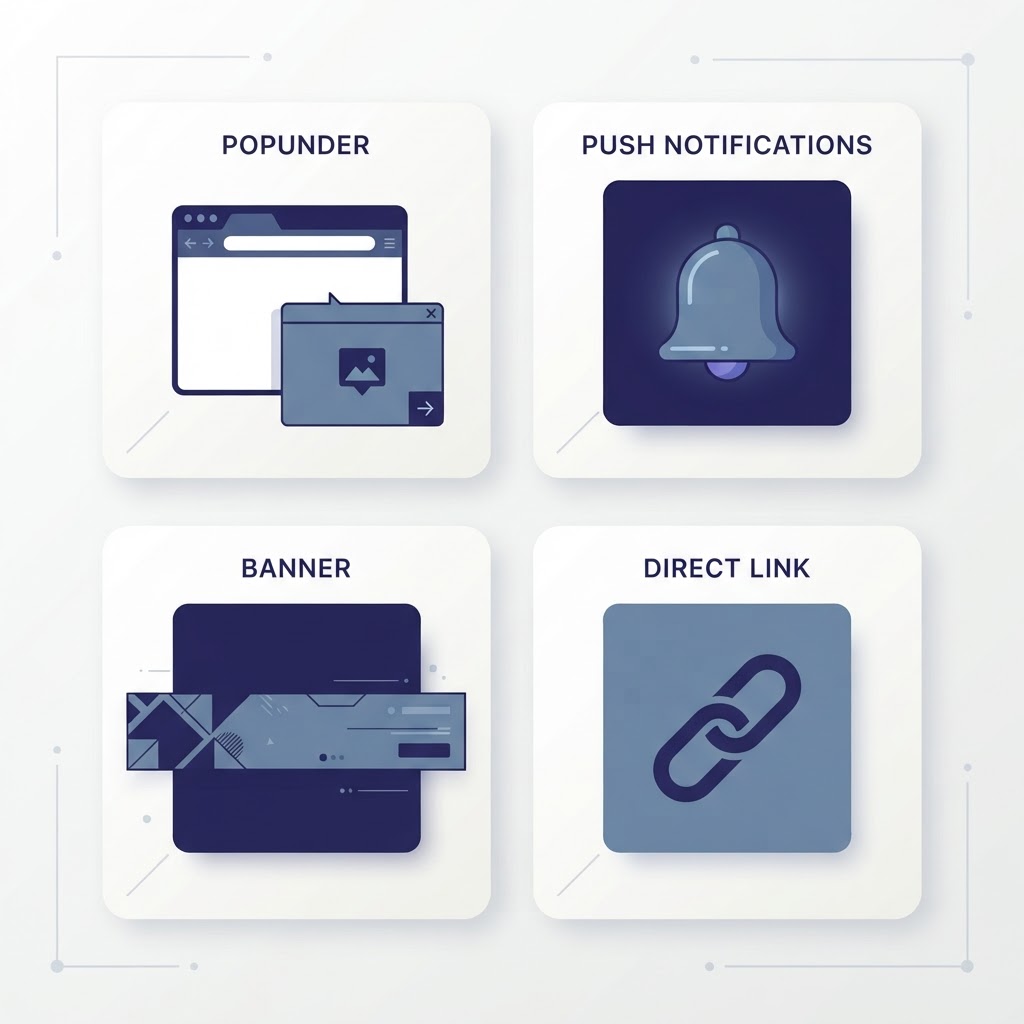
The quiet winner for most sites is push: a visitor accepts once and keeps generating revenue long after they leave, with nothing else on your page. The quiet winner for social traffic is the Direct Link, which we’ll use in a moment. Start with one or two formats, run each for a week, and let your dashboard tell you which one your audience tolerates best.
Realistic Math: CPMs and Traffic Numbers
Here’s the section the screenshots-with-hype articles never write. Your revenue is impressions divided by a thousand, times your average CPM, summed across formats. With that formula, everything becomes checkable:
| Daily traffic | Mix of formats | Average CPM | Monthly ballpark |
|---|---|---|---|
| 1,000 visits | Push + vignette, tier 1-heavy | $1.50–$3.00 | $45–$90 |
| 10,000 visits | All formats, mixed GEOs | $1.00–$2.50 | $300–$750 |
| 50,000 visits | All formats, tier 1-heavy | $1.50–$3.00 | $2,250–$4,500 |
Read the ranges as honest, not pessimistic. Actual CPMs swing by country mix, niche, season and ad-market cycles; a downloads site in tier-1 countries and a gossip site in low-tier GEOs will sit at very different ends. Nobody can promise you a specific number, and anyone who does is selling something. What’s stable is the shape: earnings scale with traffic volume times audience quality, and nothing on the dashboard changes that multiplication.
So before asking “which format pays most,” ask where your next 10,000 monthly visitors come from. If the answer is “nowhere yet,” the best format in the world earns you rounding errors. Our own growth comes from consistent content — the same cadence that fills our specs directory — and from systems like the subscription audit guide for keeping the tools that build traffic worth their cost.

Earning From Social Media Traffic
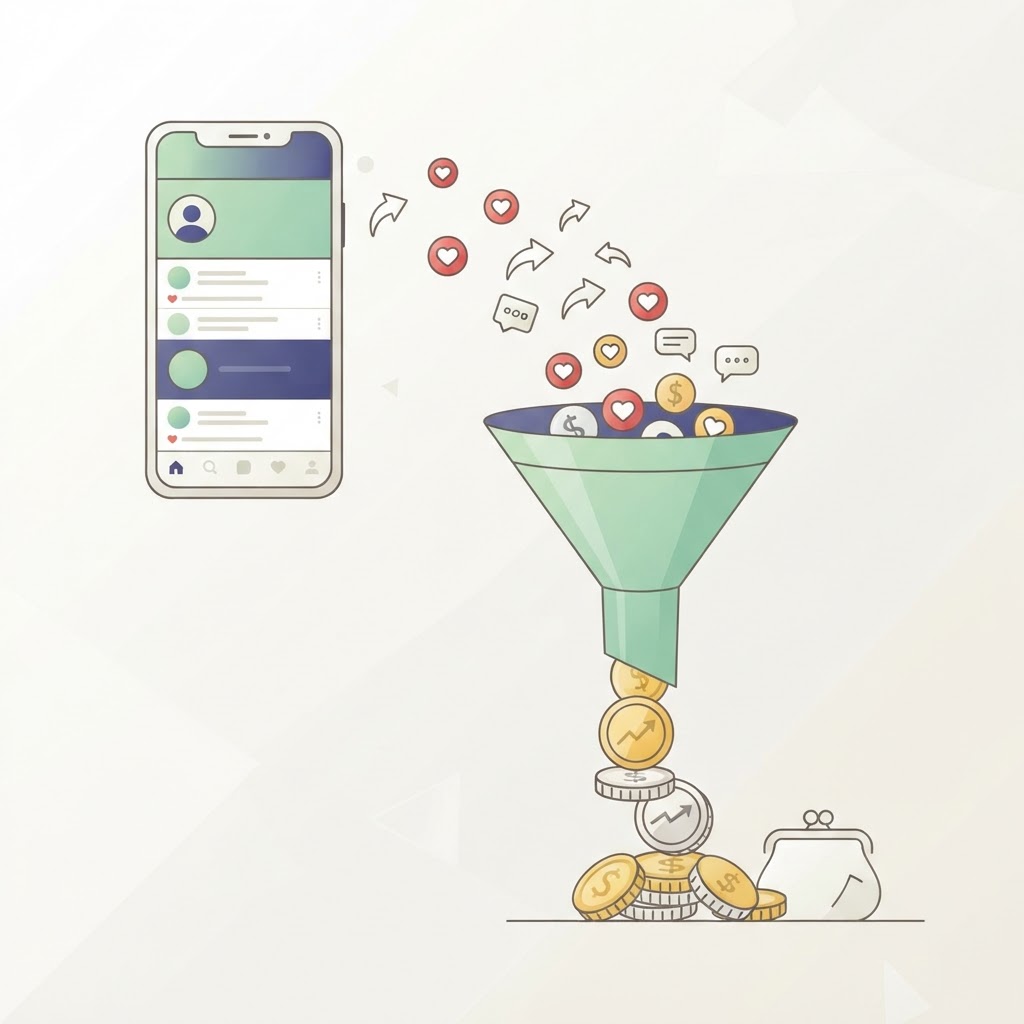
The part of Monetag almost no tutorial explains properly: you can monetize social media traffic without owning a website at all. The Direct Link (or SmartLink) is a plain URL. Every person who clicks it gets routed to whichever offer currently pays best for their device and country. You earn per impression or per conversion depending on the chain.
The honest version of how people actually make this work:
- You need a real audience, not a big one. A Telegram channel, a Facebook group, a Pinterest account or a YouTube description box with genuine clickers. A few hundred daily real clicks beats a bot-inflated thousand, because junk traffic gets filtered and can get the account reviewed.
- The link only earns where it fits. A viral-post description with a related Direct Link works; spamming the same link into 50 groups is both useless against platform spam filters and a fast route to a Monetag quality flag. Platforms also ban cloaked or deceptive links at their end — keep your audience’s trust and their spam rules intact.
- Efficiency is everything. Time spent chasing clicks on rented social platforms compounds poorly compared to owning traffic on a site you control — which is the entire philosophy behind how we built this site rather than farming links elsewhere. If you do run a client-services business around it, the closing habits in our client offboarding guide matter more than any ad format.
Payments: Getting Your Money Out
Monetag payment methods cover the usual wallets: Payoneer, Skrill, Webmoney and crypto (USDT) are the common routes, with bank/eCheck options in supported regions. Two facts to plan around: payouts run on a weekly cycle, and the minimum threshold is low for wallet methods (historically around $5, though you should confirm the current figure on the payouts page in your dashboard, since networks adjust thresholds).
Practical tips from the boring-but-important category: set your payout method during sign-up week, not payout week; pick the method with the lowest fee for your country (Payoneer for most, USDT if you’re comfortable with crypto); and expect the first payout cycle to involve verification checks — the network confirms your traffic quality before money moves, and that’s normal, not a red flag.
Mistakes That Get Accounts Banned
Every “Monetag trick” video has a comments section full of people who lost accounts. The list is short and non-negotiable:
- No bot traffic, click exchanges or “traffic panels.” Anti-fraud systems are the actual product of an ad network; fake traffic is detected and accounts are closed with earnings held.
- No clicking your own ads or sending the link to friends to “help out.” It looks identical to fraud from the inside.
- No misleading placement. Hiding the X on interstitials, disguising ads as download buttons, or pushing accidental clicks converts short-term revenue into permanent bans.
- No prohibited content. The network’s content policy mirrors the industry: no malware, piracy, illegal streaming, or adult-adjacent gray areas.
The pattern should sound familiar by now: Monetag pays for real people seeing real ads, and everything that fakes either half of that sentence ends the same way. Build traffic the slow way — useful content, tools people return for — and the network becomes a genuinely reliable revenue layer instead of a ban waiting to happen.
FAQ
How much can a beginner earn from Monetag?
With a small site doing 1,000 daily visits from tier-1 countries, realistic months land in the $50–$150 range across formats. Earnings scale almost linearly with traffic, so the real question is your traffic growth plan, not the network.
Does Monetag need a minimum traffic amount to approve you?
No hard minimum. A working site with genuine content passes review easily; empty or parked sites stall. Quality is judged from live traffic after you install the tag.
Can I earn from Monetag without a website?
Yes — through the Direct Link, placed where a real audience already clicks: Telegram channels, YouTube descriptions, forums you genuinely participate in. No site required, but the audience does need to be real.
Which Monetag format pays the most?
Popunders usually pay the highest per impression but cost the most user experience; push notifications often win long-term because subscribers keep earning after the visit. Run both for a week and let your own dashboard decide.
How does Monetag compare to AdSense?
Different machines: AdSense pays for context and clicks on commercial traffic; Monetag pays for volume and impressions on almost any traffic. Many publishers run both — AdSense inside content, Monetag on the volume layers — if policies and ad density allow it.
Is Monetag legit and safe?
Yes — it’s an established network (part of the same group behind PropellerAds) with a long publisher track record, weekly payouts and low thresholds. The risk in this niche isn’t the network; it’s publishers trying to shortcut with fake traffic.