AI Tools
AI Voice Cloning for Client Work: The Consent Paper Trail Nobody Builds
☰ Table of Contents
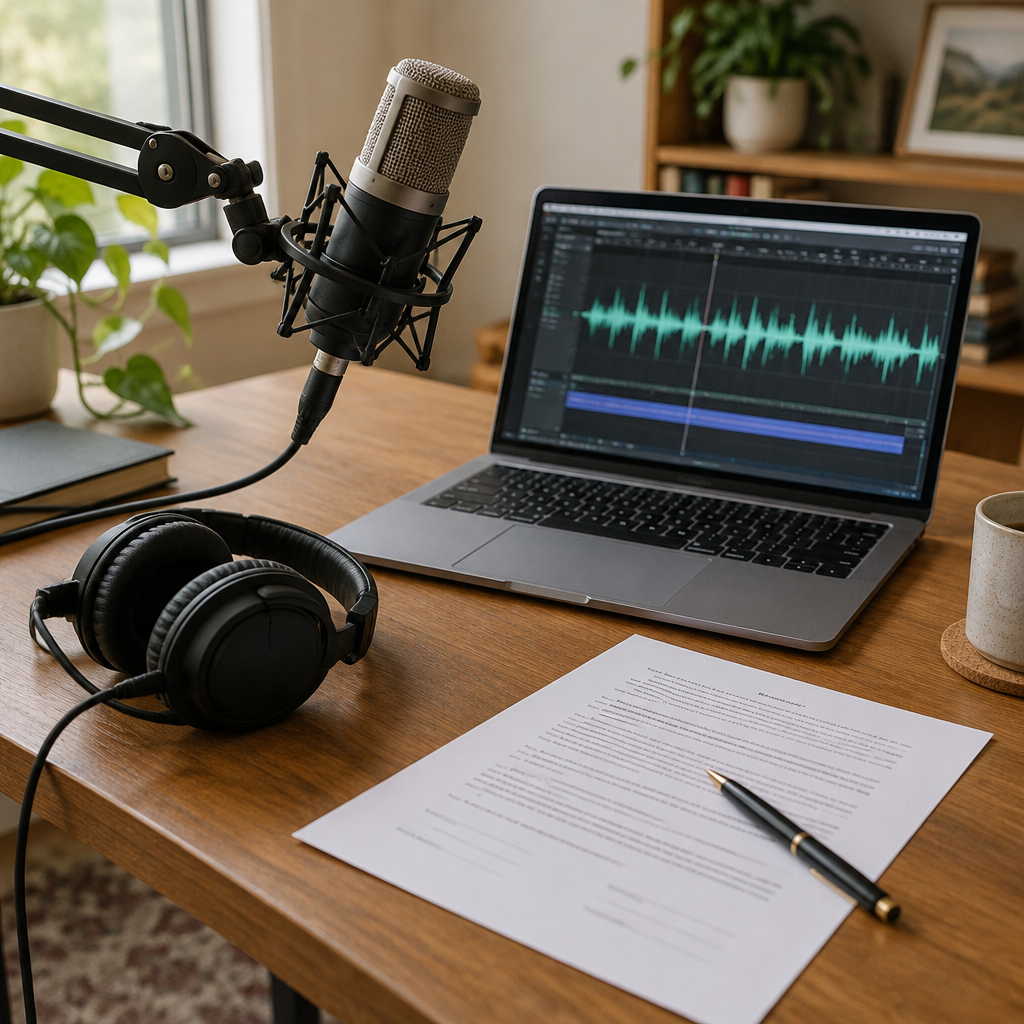
A client sends you forty seconds of their founder’s voice, asks for a two-minute product explainer, and tells you to use whatever AI tool you like. You do. The voice is convincing, the client is delighted, and six weeks later the founder’s business partner forwards the video to a lawyer who asks one question: where is the written permission to make a synthetic copy of his voice?
That question is where most freelance AI voice cloning projects die. Not because the work was wrong, but because nobody built the paper trail. Studios document image rights, music licences and model releases as a reflex. Voice, which only recently became cheap to copy, still gets treated as part of the general “creative assets” line in a scope of work.
This guide is the file we assemble before any cloned voice goes into client output: what voice cloning consent has to cover, where AI voice disclosure is now required, which clauses to pull out of a generic contract, and the one hour of admin that keeps a project from becoming a legal argument.
Why Voice Became Its Own Legal Category
For a century, a voice was hard to copy at scale. That changed fast, and in less than three years the rules caught up in several places at once:
- Right of publicity. US states protect a person’s name, image and voice from commercial use without permission. Tennessee’s ELVIS Act (2024) named voice explicitly and made it actionable to use a tool to replicate a voice without consent.
- Contract rules for digital replicas. California’s AB 2602 (effective 2025) targets contracts that hand over a digital replica of a performer’s voice or likeness: the use has to be described with reasonable specificity, and the performer needs representation or a union agreement.
- EU AI Act Article 50. From 2 August 2026, deployers that generate synthetic audio must make it clear the content is AI-generated, and deepfake disclosure rules apply to realistic depictions of real people. The Commission published its Article 50 guidelines in July 2026.
- Politically sensitive audio. The FCC moved against AI-cloned voices in robocalls in 2024, and the FTC’s impersonation rule covers AI-generated voice impersonation of individuals — both aimed at fraud, but both shape how platforms police uploads.
- Platform policy. YouTube, Meta and the major ad networks ask for an altered or synthetic content declaration on realistic AI media, and increasingly apply labels even when creators do not.
Read those five lines together and the pattern is obvious: the consent question is asked at the point of publication, not at the point of generation. By the time the platform or the client’s lawyer asks, your file either has the document or it does not.
| Where the client sits | What applies | What it means for your deliverable |
|---|---|---|
| United States | State right of publicity + ELVIS-style voice statutes + California’s digital replica contract rules | Written permission from the voice owner, specific about the use and the media |
| European Union | AI Act Article 50 disclosure and deepfake labelling (from Aug 2026) + GDPR for the voice sample as personal data | A visible AI-generated disclosure, plus a lawful basis and retention limit for the audio |
| Canada | Provincial privacy law + personality rights in Quebec and some common-law cases | Same paperwork as the US, with a shorter retention default |
| Paid advertising anywhere | Ad platform synthetic-media policy | A declaration at upload, and a label the platform can verify |
None of that requires a law firm for a small project. All of it requires one signed page and one visible label. If you already keep a provenance log for AI-assisted work — we described one in our AI deliverable provenance log guide — the voice release is just a second page in the same folder.
The Three Permissions Everyone Confuses
Almost every voice problem we see starts with one signature being treated as three. These are separate rights, and a client can grant one without granting the others:
- Permission to record. “You can record this call / this session.” Usually granted casually, verbally, or by implication. It says nothing about synthesising anything.
- Permission to model. “You can build a cloned voice model from these samples.” This is the permission that makes a voice into an asset that can be reused indefinitely, and it is the one nobody asks for.
- Permission to publish. “You can put that synthetic voice into these specific deliverables, in these markets, for this period.” Scope, territory, term, media.
A scope of work that says “client will supply brand assets and voiceover” grants none of the three. Neither does a founder’s Slack message saying “sure, go ahead, sounds fun.” Both are fine as a start; neither will survive a request from a distributor, a broadcaster or a platform review team.
What a Usable Voice Release Actually Contains
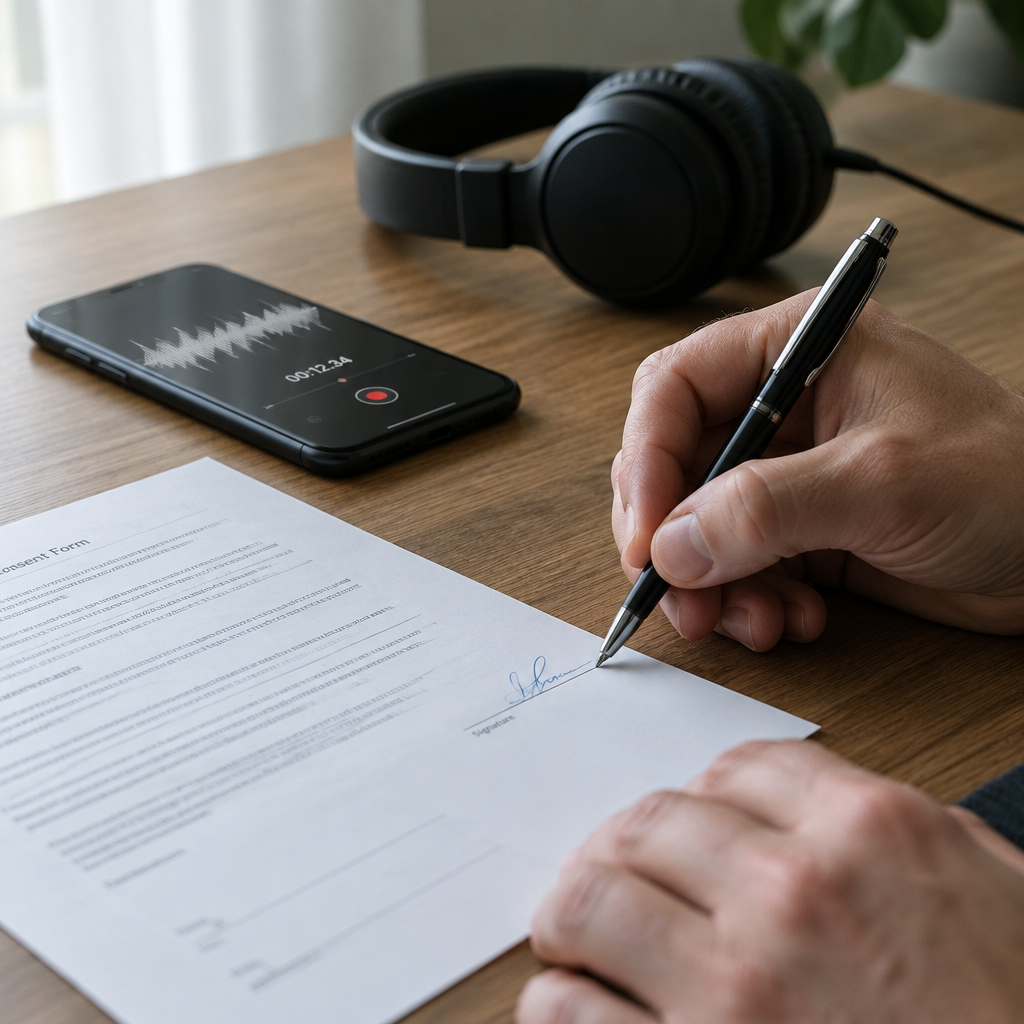
A voice release does not need to be long. It needs to be specific enough that a stranger reading it knows exactly what was allowed. Eleven clauses cover nearly every project:
| Clause | What it should say | Why it matters in practice |
|---|---|---|
| Voice owner | Full legal name, and the fact that this person owns the voice being cloned | Prevents “the company signed, so we assumed” |
| Source material | Which recording(s), how many minutes, delivered when | Shows the model came from consented audio, not scraped clips |
| Scope of use | Named deliverables and formats, not “any marketing use” | Stops a training video becoming a paid ad in month three |
| Territory and media | Countries and channels explicitly listed | Broadcast and paid social are different permissions |
| Term | Start and end date, plus what happens at the end | An open-ended clone is the clause clients regret |
| Script control | Voice owner approves final text before synthesis | The only real defence against a voice saying the wrong thing |
| Disclosure | How the output will be labelled as AI-generated | Aligns with Article 50 and platform declarations |
| No new statements | Nothing endorsing a product or claim not approved in writing | Covers the endorsement-law angle directly |
| Sub-licensing | Whether the client can hand the model to another vendor | Yours to grant or refuse; default to refuse |
| Deletion | Model and samples destroyed by a stated date, with confirmation | Your proof that the asset no longer exists |
| Withdrawal | What happens if the voice owner revokes consent mid-campaign | Turns a crisis into a takedown procedure |
Keep it to two pages and send it with the kickoff pack rather than after the first draft. Clients sign more readily before they hear the clone than after they have an opinion about it.
Script Approval Is Where Clones Get Dangerous
Consent to clone is not consent to say anything. A synthetic voice is a mouth with no judgement, and the failure mode is not a bad accent — it is a sentence the real person would never have said, delivered in their own tone, on a page where their customers are watching.
The workable protocol is boring and short:
- Freeze the script before synthesis. No generating audio from a draft that is still being edited. Every regenerate is a new file with a new version number.
- Send the approved script, not the audio, for sign-off. Reviewing text is fast and unambiguous. Reviewing a voice invites taste debates and hides wording changes.
- Keep the approved version. One PDF of the final script, dated, in the same folder as the release. That document is what proves the words were authorised.
- Re-approve anything that touches a claim. Prices, guarantees, medical or financial statements, competitor comparisons. Those are the sentences that attract complaints.
If your client has an in-house legal or comms reviewer, add them to the script approval step and not to the audio review. You will cut a week of back-and-forth.
Where the Disclosure Has to Appear

Disclosure is the part freelancers skip because it feels like it weakens the work. In practice it protects the client more than it hurts the video: audiences forgive a labelled synthetic voice, and platforms remove unlabelled ones.
Where to put it, in order of how much trouble it saves:
- On screen, at first exposure. A small persistent “AI voice” mark or a two-second card at the opening. Article 50 expects the disclosure to be clear and distinguishable no later than the first exposure, and accessible.
- In the platform declaration. Tick the altered or synthetic content setting on YouTube, and the equivalent on Meta, TikTok and any ad network. Declaring it is faster than appealing a label later.
- In the description or caption. One plain sentence: “Narration in this video is AI-generated from [name]’s recorded voice, used with permission.”
- In file metadata. Where the tool supports Content Credentials or C2PA signing, keep it on. Machine-readable marking is what survives re-uploads.
- In the client’s own approved copy, if the deliverable is an ad that a media buyer will traffic without you.
Two exceptions worth knowing: purely fictional voices with no real person behind them still need disclosure in the EU when they could be mistaken for real, and obviously stylised or comedic voices may fall outside deepfake labelling. When in doubt, label. A label has never cost a client a sale; a removed video has.
Retention: What Happens to the Voice Model After the Job
The release gets signed. The audio gets published. Then the contract ends and nobody asks the awkward question: the cloned model still exists, in your tool account and possibly on the client’s vendor’s server.
A voice model is not a finished file; it is a reusable capability. Treat it the way you would treat a client’s admin password:
- One model per project, named with the client and the date. Shared “brand voices” folders are where mix-ups happen.
- Delete on the date in the release, and keep the deletion confirmation. A screenshot of the deleted model plus the provider’s confirmation email is enough evidence.
- Know the provider’s retention. Many tools keep uploaded samples for a period after you delete the voice. Check the policy and note the date in your file.
- Decide who can regenerate. If the client wants the ability to re-run the voice after handoff, that is a licence, and it should be priced and time-limited rather than granted by leaving your login active.
This is the same discipline as revoking access at the end of a project. If you already run an offboarding pass, add “delete voice models and samples” to it next to “remove users from the CMS.”
A File You Can Assemble in Forty Minutes
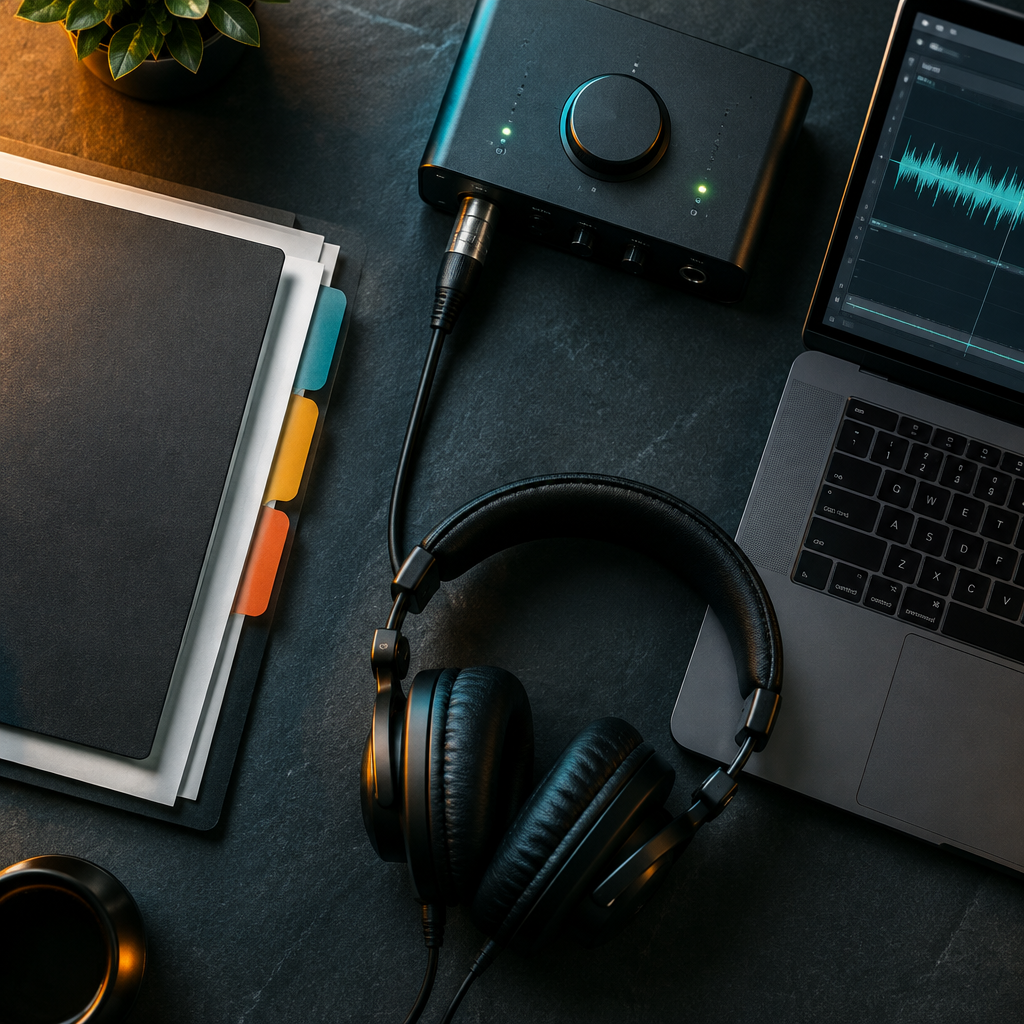
One folder, seven items, assembled once and reused on every voice project:
- Voice release, signed by the person whose voice is being cloned, with the eleven clauses above.
- Source sample note: which recording, how long, delivered by whom, on what date.
- Approved script, dated, matching the version that was synthesised.
- Generation record: tool, model or voice ID, settings, date, and who ran it.
- Deliverable list: exact files and formats produced, and where each was published.
- Disclosure evidence: the on-screen label, the platform declaration, the description line.
- Deletion confirmation, dated, when the term ends.
Forty minutes on the first project, five on every one after that. If a client ever asks “can you prove this was allowed,” you answer with a folder instead of a memory. The same sign-off discipline we described for translated work applies here — see our guide to getting a real sign-off on AI-translated client work — and the category page for AI tools has the rest of our tested workflows.
When the Right Answer Is No
Some requests should be declined before they become paperwork. Decline, in writing, when:
- The voice belongs to someone who cannot consent, including a deceased person or a minor, and there is no estate or guardian process in place.
- The voice is a celebrity impression, even a legally careful one. “Sounds like” is exactly what the rules are built to catch.
- The client wants a synthetic endorsement of a product the voice owner has not approved, or a claim they would not make themselves.
- The sample was scraped from podcasts, webinars or someone else’s YouTube channel. No release, no project.
- The client wants political or crisis messaging in a real person’s voice. The reputational downside lands on you as the vendor of record.
Saying no costs one brief. Saying yes without a release costs a takedown, a platform strike, and in the EU a potential fine conversation the client will pass straight to you.
FAQ
Do I need a separate voice release if the client already signed the contract?
Yes. The contract covers the company; the voice belongs to a person. A founder, spokesperson or employee signs their own one-page release, and it should name the voice owner explicitly rather than referring to “client personnel.”
Is a text message saying “sure, go ahead” enough permission?
It is better than nothing and weaker than it looks. It usually fails on scope — no territory, no term, no media list — which is exactly what a platform review or a distributor will ask about. Convert every casual yes into the one-page release before you generate audio.
Do I have to label AI narration in the video?
In the EU, from August 2026, synthetic audio needs a clear disclosure, and realistic depictions of real people need deepfake labelling. On the major platforms, declaring altered or synthetic content is the practical equivalent and prevents a label being applied for you. Outside those cases, labelling is still the safer default.
Can the client reuse the cloned voice after the project ends?
Only if the release says so. By default, the model is deleted on the end date, and any later reuse is a new licence. Leaving a voice model alive in your account is effectively granting unlimited reuse for free.
What if the voice owner withdraws consent later?
Have a withdrawal clause. It should say what happens to already-published material, who removes it, within how many days, and who pays for the re-edit. Projects with a withdrawal procedure resolve in a week; projects without one go quiet and then get legal.
Does this apply to my own voice?
Yes, if a client is paying for the output. Cloning yourself and delivering it commercially still needs a disclosure, and often the platform declaration is the only step that matters. The one thing you can skip is the release, because you are the voice owner.